Rockets in Flight...

A Review of October Sky by Joel McClain
The Movie
October Sky is a wonderful, gripping movie about the early rocket
program and how dreams become realities.
Synopsis: In Coalwood, West
Virginia, all the boys grow up to be coal miners and Homer Hickam has
no reason to think he'll be any different. Too small to earn a football
scholarship, Homer has no way out of his predetermined life -- until
the soviet satellite Sputnik flies over the October sky and changes
everything. It's 1957 and Homer's world just got a lot bigger. Though
his father is mine superintendent and has no greater wish than to see
his sons follow in his footsteps, Homer embarks on a mission to build
and launch his own homemade rockets with the help of his loyal band of
friends. Though their frequent mistakes nearly get them shut down,
their successes inspire the whole town to believe that miracles can
happen even in Coalwood, and there's nothing wrong with shooting for
the stars.
What I liked most about this movie
is the growth of the main character, Homer Hickam. He starts off as
shy, withdrawn, unsure of his self, and weak. Through confidence gained
from building rockets he overcomes these things.
His inspiration was: Robert
Goddard, who is called the Father of the Modern Rocket, carried out the
humanity's first successful test flights of a rocket using liquid fuel
in 1926. After that, Werner Van Braun in the 1940s developed the V-2
rocket, which was the first liquid fuel rocket to employ the pump
system, and realized the technologies for the modern rocket. Since
then, liquid fuel rockets have been used in a wide variety of areas,
from the Space Shuttle to Japan's H-IIA rocket. Although more
complicated to build than solid fuel rockets, they allow for the use of
propellants with high specific impulse and thus greater propulsive
thrust.
Who was Homer Hickam: Like many
other 14-year-old boys, Homer Hickam, Jr. loved rockets. When the
Soviet satellite Sputnik traveled over his home in Coalwood, West
Virginia in 1957, it was a defining moment for space travel, and for
Homer. But Homer was different from most of those other boys who were
infatuated with space travel. He grew up to become an aerospace
engineer.
After Sputnik, Homer was
enthralled by the whole idea of space travel. He idolized Werner von
Braun, the scientist who headed the United State’s space program based
in Cape Canaveral. He wanted to build rockets, and his mother, Elsie
encouraged him. His father, a mining supervisor, condemned Homer’s
dreams as foolishness. He thought Homer was throwing away a lucrative
career in coal mining.
Homer’s first rocket blew up
the garden fence. Homer didn’t give up, though. Despite his father’s
opposition, Homer persevered. He decided he needed to learn about
rocket science, and it was an uphill battle because of his poor math
skills. With five of his friends, he went to work.
After several explosive
misfires, he and his friends taught themselves to build a rocket that
soared five miles above the coal mines. They had help, Homer says, and
they never could have done it without the support of a sympathetic
science teacher. Some of the men who worked in the machine shop making
parts for miners helped, too, making parts for the rockets.
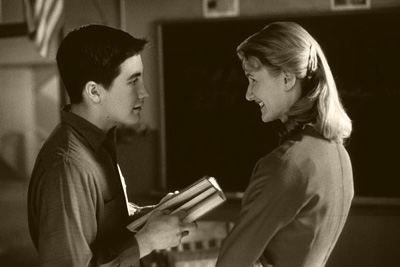
Their teacher encouraged
them to submit their rocket project in West Virginia’s statewide
science fair. The project won first place. Homer headed for the
national science fair, filled with hope that his rocket and his
research would win at least an honorable mention.
But someone at the fair
stole the nozzle of Homer’s rocket. The nozzle was crucial to his
research, and Homer, distraught, called home.
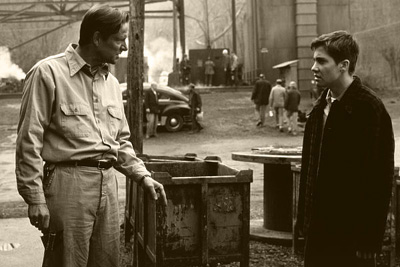
He talked with his father,
who was then deeply involved in negotiations with striking coal miners.
When the strike ended that same day, his father got the machinists to
quickly make a new nozzle. The nozzle was sent to Homer overnight.
Homer thinks that his father
may have conceded to the miner’s demands so that he could get the
machinists to construct the part that he needed. It might have been his
father’s manner of telling Homer he was proud of him, or an apology for
doubting Homer’s abilities.
Whatever motivations his
father may have had, receiving the nozzle certainly helped to shape the
rest of Homer’s life. The rocket project received the gold medal in the
1960 National Science Fair.
The science fair project
propelled Homer into college at Virginia Tech, and eventually on to
NASA. Homer wonders frequently what would have happened if he had not
seen Sputnik streak over the night sky of the grimy coal town where he
spent his youth.
Homer Hickam, Jr. pursued
his dreams, and the man who started out flying miniature rockets began
to send up big-time rockets. He worked for NASA for seventeen years,
and has had a long, distinguished career. Among other things, he has
helped train astronauts, and was one of the designers of the Spacelab.
The flight of the satellite
he saw as a child inspired a dream, and Homer yearned to be part of the
great adventure of space travel. He refused to take no for an answer,
and so grew up to live his fantasy.
Cast: Jake Gyllenhaal, Laura Dern, Chris Cooper, Chris Owen, William Lee Scott
Joel
McClain is an Intelligence Specialist for the US Navy, volunteer
Firefighter, bartends on the weekends while umpires kids baseball games
2 days a week. His sports include I like to lift weights a lot and box.
Mr. McClain is currently going to school for Physical Therapy, and had
aspirations to be a real Astronaut.
Born in
Kentucky and living in many states such as Virginia, Chicago Illinois,
and currently lives in Washington State… he’s also lived and worked in
12 other countries including Australia, Germany, Japan, Canada, Mexico,
and various middle eastern countries.
Your thoughts? Drop us a line through our letters box.