
14
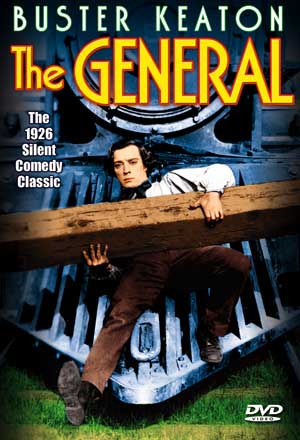
The General
Release date 5th February 1927
Country: USA
Running time: 75 minutes
Genre : Comedy
Starring Buster Keaton
Screenplay by Al Boasberg, Buster Keaton and Clyde Bruckman
Directed by Buster Keaton and Clyde Bruckman
Johnnie Gray has two major loves in his life : his engine and his girlfriend Annabelle.
When both are captured by Union spies he goes off in hot pursuit.
Unfortunately, this
great film hasn't always enjoyed a great reputation. At the time of its initial
release it actually lost money, and the critics were nearly unanimous in their
negative reactions to it. Yet this is a meticulously crafted work of cinematic
genius. What many find most impressive about the film is its realistic rendering
of its Civil War setting based on Matthew Brady's famous pictures. Buster Keaton
was renowned for both his concern for historical accuracy and for the care he
took in making sure that the backgrounds of his carefully composed shots were
interesting and appropriate.

Keaton was initially
inspired by The Great Locomotive Chase, William Pittenger's account of an actual
Civil War event. In 1862, Pittenger and nineteen other out-of-uniform Union
soldiers made their way to Atlanta, stole a train,and headed north for
Chattanooga, destroying bridges as they went.
Fascinated by this story, Keaton chose to tell it from the perspective of the Southerners, then set about finding the best place to re-create the events.He learned that Oregon was laced with narrow-gauge train tracks like those used during the Civil War.
Fortunately, there were also a number of old train engines that serviced the area's lumber camps, and three of these were remodeled to suit the film's purposes. Keaton determined to capture the scope of the real events used 500 members of the Oregon National Guard as extras.

DVD available from
| DVD | Book | Book |
| Posters |


Copyright © The Fedora Chronicles
Poster from
The Oldies.com