Mary Pickford (1892 - 1979)
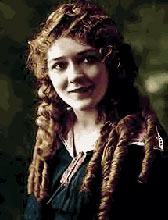
Born into genteel poverty Mary's mother
was widowed by the time she was five. The child began acting in a local
stock company. In 1907 producer David Belasco gave her a small role in
his Broadway production The Warrens of Virginia. Mary went to the
Biograph studio and got $10 a day for appearing in the flickers.
Soon the public were calling her Little Mary and she became the biggest star of silent films bigger even than Chaplin. Mary became the first and most famous example of typecasting when the public wouldn't accept her as anyone else but a young girl with golden curls. This very Victorian view of a young girl was reflected in films like : A Little Princess (1917), Rebecca of Sunnybrook Farm (1917), Pollyanna (1920), Little Lord Fauntleroy (1921) (in this case a young boy) and Little Annie Rooney (1925).
Pickford though played her heroines with idealism and spunk and if you can see past a woman in her twenties and thirties dressed as a young girl these films can still entertain. The films which have survived best temper the sugar with a harder edge, Pickford also worked with a forgotten though very talented director of light comedy/drama Marshall Neilan who helmed two of her greatest films Stella Maris (1918) and Daddy Long Legs (1919). Her most lasting work though is probably her last silent My Best Girl (1927) a delightful comedy.
With the coming of sound Pickford chose George Abbot's Coquette (1929) and won the Academy Award for Best Actress but the role made her just another flapper. Her later films weren't successful and she retired from the screen in 1933.
Fairbanks and Pickford had been the king and queen of Hollywood in the 20s but times had changed. Their marriage ended in 1936 and she wed actor Charles "Buddy" Rogers, by all accounts a happy union which lasted until her death.

Soon the public were calling her Little Mary and she became the biggest star of silent films bigger even than Chaplin. Mary became the first and most famous example of typecasting when the public wouldn't accept her as anyone else but a young girl with golden curls. This very Victorian view of a young girl was reflected in films like : A Little Princess (1917), Rebecca of Sunnybrook Farm (1917), Pollyanna (1920), Little Lord Fauntleroy (1921) (in this case a young boy) and Little Annie Rooney (1925).
Pickford though played her heroines with idealism and spunk and if you can see past a woman in her twenties and thirties dressed as a young girl these films can still entertain. The films which have survived best temper the sugar with a harder edge, Pickford also worked with a forgotten though very talented director of light comedy/drama Marshall Neilan who helmed two of her greatest films Stella Maris (1918) and Daddy Long Legs (1919). Her most lasting work though is probably her last silent My Best Girl (1927) a delightful comedy.
With the coming of sound Pickford chose George Abbot's Coquette (1929) and won the Academy Award for Best Actress but the role made her just another flapper. Her later films weren't successful and she retired from the screen in 1933.
Fairbanks and Pickford had been the king and queen of Hollywood in the 20s but times had changed. Their marriage ended in 1936 and she wed actor Charles "Buddy" Rogers, by all accounts a happy union which lasted until her death.
Written content copyright Derek McLellan,2005.
Copyright © The Fedora Chronicles
Mary Pickford image from
http://www.biographcompany.com/celebrity/pickford.html