James Cagney (1899 - 1986)
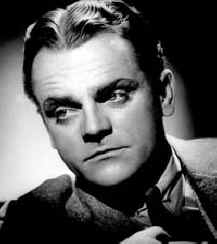
Cagney was the
screen's greatest tough guy or gangster, he was pigeon-holed into that
role early on in his career and never really got way from it.
Occasionally moviegoers saw Cagney as he saw himself a song and dance
man but he fitted the tough guy image like a glove, even those roles
not specifically in that mould had enthusiasm and street cred.
Enthusiasm sums up Cagney really as a tough gangster he leaps off the
screen with a vitality few in such a role have exhibited.
He first showed that vitality in The Public Enemy (1931) as Tom Powers a fairly disreputable thug but one the audience identifies with despite his shoving a grapefruit in his girlfriend's (Mae Clarke) face. Cagney pulled Mae by the hair in another of his early films Lady Killer (1933) a skilfully choreographed move which betrayed his background as a dancer. In Footlight Parade (1933) he got his first real chance to really demonstrate that lighter side to his talent, singing and dancing with Ruby Keeler in the great Shanghai Lil number.
Like Bette Davis and Olivia de Havilland Cagney rebelled against the heavy workload at Warners and demanded more control over his career. In the mid Thirties he walked out on the studio and made two films for a small independent : Great Guy (1936) and Something To Sing About (1936), both films though entertaining enough particularly the latter lacked the big studio gloss and Cagney was soon back at Warners although with a much improved contract.
The late Thirties and early Forties were probably the peak of his career with two of his greatest gangster roles : Rocky Sullivan in Angels with Dirty Faces (1938) and Eddie Bartlett in The Roaring Twenties (1939). He then won the Best Actor Oscar for his performance as the Irish American entertainer George M. Cohan in Yankee Doodle Dandy (1942).
Cagney made some interesting movies in the Forties including Blood On The Sun (1945) and 13 Rue Madeleine (1946) but wasn't really back to his best until he returned to Warners as mother loving psychopath Cody Jarrett in White Heat (1949). The 1950s were a mixed decade but he was back in form in movies like Love Me or Leave Me (1955) as Moe "the Gimp" Snyder opposite Doris Day's Ruth Etting and he reprised his Oscar winning portrayal of George M. Cohan opposite Bob Hope in another biopic The Seven Little Foys (1955).
After Billy Wilder's One, Two, Three (1961) Cagney pretty much retired from the screen apart from a few appearances in the early Eighties but the old vitality wasn't there.
He was very much an actor of the old school who believed that you simply said your lines but meant them, he wasn't one for getting into the head of the character. His straightforward style gave truth to his performances and the best of them remain top of the world.
He first showed that vitality in The Public Enemy (1931) as Tom Powers a fairly disreputable thug but one the audience identifies with despite his shoving a grapefruit in his girlfriend's (Mae Clarke) face. Cagney pulled Mae by the hair in another of his early films Lady Killer (1933) a skilfully choreographed move which betrayed his background as a dancer. In Footlight Parade (1933) he got his first real chance to really demonstrate that lighter side to his talent, singing and dancing with Ruby Keeler in the great Shanghai Lil number.
Like Bette Davis and Olivia de Havilland Cagney rebelled against the heavy workload at Warners and demanded more control over his career. In the mid Thirties he walked out on the studio and made two films for a small independent : Great Guy (1936) and Something To Sing About (1936), both films though entertaining enough particularly the latter lacked the big studio gloss and Cagney was soon back at Warners although with a much improved contract.
The late Thirties and early Forties were probably the peak of his career with two of his greatest gangster roles : Rocky Sullivan in Angels with Dirty Faces (1938) and Eddie Bartlett in The Roaring Twenties (1939). He then won the Best Actor Oscar for his performance as the Irish American entertainer George M. Cohan in Yankee Doodle Dandy (1942).
Cagney made some interesting movies in the Forties including Blood On The Sun (1945) and 13 Rue Madeleine (1946) but wasn't really back to his best until he returned to Warners as mother loving psychopath Cody Jarrett in White Heat (1949). The 1950s were a mixed decade but he was back in form in movies like Love Me or Leave Me (1955) as Moe "the Gimp" Snyder opposite Doris Day's Ruth Etting and he reprised his Oscar winning portrayal of George M. Cohan opposite Bob Hope in another biopic The Seven Little Foys (1955).
After Billy Wilder's One, Two, Three (1961) Cagney pretty much retired from the screen apart from a few appearances in the early Eighties but the old vitality wasn't there.
He was very much an actor of the old school who believed that you simply said your lines but meant them, he wasn't one for getting into the head of the character. His straightforward style gave truth to his performances and the best of them remain top of the world.

Written content copyright Derek McLellan,2005.
Copyright © The Fedora Chronicles
James Cagney image from
www.hollywoodusa.co.uk/GravesOutofLA/cagney.htm