Buster Keaton (1895 -1966)
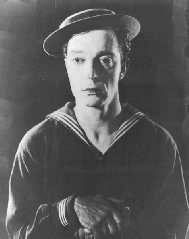
Buster Keaton was the most cinematic of
the silent comedians. He was fascinated by film from the moment he
first stepped in front of a camera. The dazzling Sherlock Junior (1924)
is one of the most cinematic films ever made in its use of special
effects shots which were well ahead of their time, only Keaton could
have dreamed up the scenario of the hero entering the screen and
joining the action in the film. Keaton's films took in the whole
landscape while Chaplins focused on the Tramp. Unlike Lloyd Keaton's
grace and agility made dangerous stunts look easy and he rarely used
stuntmen. Keaton's little man was also quite cynical with regard to
women, though he attempts to help them, they become more rewards for
valour than real love objects in his independent films, he never put
women up in a pedestal like Chaplin and Lloyd did. This lack of
sentiment or overtly asking for sympathy made Keaton less popular in
his time though arguably more accessible today.
Buster was a vaudevillian from the age of three in an act with his parents called The Three Keatons in which he was dubbed "the Human Mop" and kicked about and thrown through scenery for comic effect. Early on Buster recalled that he was the sort of comedian who registered bigger laughs without a smile, so the Great Stone Face was born though in his early shorts co-starring with good friend Roscoe "Fatty" Arbuckle he can be seen smiling, laughing and crying.
In 1920 Buster started making a superb series of two reelers some of which are among the funniest of his films : One Week (1920), The High Sign (1920), The Boat (1921) and Cops (1922). He made the transition to features with Three Ages (1923) a parody of Griffith's Intolerance (1916) which was like three two reelers spliced together though it had its moments of surreal brilliance. Keaton liked parodying dramatic films of the time and two of his greatest films are also period pieces : Our Hospitality (1923) and The General (1927).
Unfortunately Buster was very much third in popularity among the silent clowns in the silent era and lacked the business acumen of his rivals. His films were produced by Joseph Schenck who Keaton trusted with money matters. In 1928 after the delightful Steamboat Bill Junior (1928) failed to cover its costs Schenck turned Buster over to MGM as a contract player.
At first things didn't go too badly and there are classic moments in both The Cameraman (1928) and Spite Marriage (1929) but already what made Buster unique, his resourcefulness and view of the woman was being eroded. Sound added to his problems, also a failing marriage and heavy drinking. Keaton's voice was a slow drawl totally at odds with his grace but the new rhythms of the talkie were also wrong for his brilliant visual gags. MGM saddled him as well with wisecrack happy writers and Jimmy Durante. He was finally fired in 1933.
Thankfully Keaton lived to see a revival in interest in his silent films and kept busy until his death with film appearances, music hall tours and TV. Buster was very popular with his co-workers and was a fine director, his greatest films will continue to entertain us for many years to come.

Buster was a vaudevillian from the age of three in an act with his parents called The Three Keatons in which he was dubbed "the Human Mop" and kicked about and thrown through scenery for comic effect. Early on Buster recalled that he was the sort of comedian who registered bigger laughs without a smile, so the Great Stone Face was born though in his early shorts co-starring with good friend Roscoe "Fatty" Arbuckle he can be seen smiling, laughing and crying.
In 1920 Buster started making a superb series of two reelers some of which are among the funniest of his films : One Week (1920), The High Sign (1920), The Boat (1921) and Cops (1922). He made the transition to features with Three Ages (1923) a parody of Griffith's Intolerance (1916) which was like three two reelers spliced together though it had its moments of surreal brilliance. Keaton liked parodying dramatic films of the time and two of his greatest films are also period pieces : Our Hospitality (1923) and The General (1927).
Unfortunately Buster was very much third in popularity among the silent clowns in the silent era and lacked the business acumen of his rivals. His films were produced by Joseph Schenck who Keaton trusted with money matters. In 1928 after the delightful Steamboat Bill Junior (1928) failed to cover its costs Schenck turned Buster over to MGM as a contract player.
At first things didn't go too badly and there are classic moments in both The Cameraman (1928) and Spite Marriage (1929) but already what made Buster unique, his resourcefulness and view of the woman was being eroded. Sound added to his problems, also a failing marriage and heavy drinking. Keaton's voice was a slow drawl totally at odds with his grace but the new rhythms of the talkie were also wrong for his brilliant visual gags. MGM saddled him as well with wisecrack happy writers and Jimmy Durante. He was finally fired in 1933.
Thankfully Keaton lived to see a revival in interest in his silent films and kept busy until his death with film appearances, music hall tours and TV. Buster was very popular with his co-workers and was a fine director, his greatest films will continue to entertain us for many years to come.
Written content copyright Derek McLellan,2005.
Copyright © The Fedora Chronicles
Buster Keaton Image from
http://www.ida.liu.se/~juhta/buster/article_berlin95.html